 English
 Español
 Português
Add: No.6 Longjin Avenue, Jinxia Printing Industry, Jinxiang Town, Cangnan County, Wenzhou City, Zhejiang Province
Tel: +86-19706000801
WhatsApp: +86 13760639817
Wechat: 19706000801

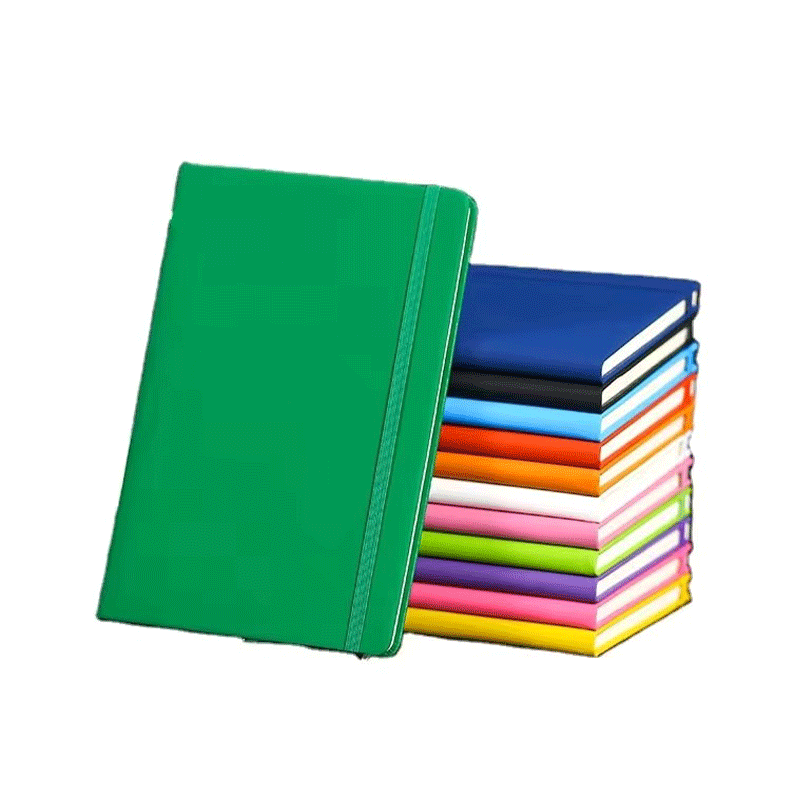
A paper cover scuffs, stains, and curls at the corners after a month in a bag. A PU cover does not. Polyurethane is the synthetic material that gives the notebook the look and the hand feel of leather without the price or the animal origin. The paper inside is the same as any notebook. The cover is the reason the customer picks it up.
PU can be formulated to feel like leather, suede, or a matte rubber surface. The cheap version feels slick and cold, and the hand knows immediately. The quality version feels soft and slightly warm. The difference is the formulation and the surface texture, not the thickness.
The buyer who picks up the notebook in the store does not need to be told it is synthetic. The hand decides before the eye reads the label.
The cover is a PU layer bonded to a paper or board backing. The PU gives the touch and the board gives the stiffness. The bonding step decides whether the cover stays flat or curls at the corners after a month in the bag.
A thin board under a thick PU layer curls. A thick board under a thin PU layer feels stiff and cheap. The manufacturer who balances the two builds a cover that stays flat through the season.
The PU surface takes the foil stamp, the deboss, and the screen print. The foil lays down the metallic logo. The deboss presses the logo into the surface without the color. The screen print puts the flat color on the cover.
The cheap foil flakes off after a few weeks. The quality foil bonds to the PU and stays. The deboss is the subtle option for the brand that wants the logo without the shine.
Here is what a PU notebook has to get right:
A case-bound PU notebook has a rigid spine and sewn pages. It feels like a book. A wire-bound version has the double loop and opens flat on the desk. The buyer chooses the binding for the way the notebook is used, not for the look.
The foil flakes because the stamping temperature was wrong. The cover peels at the corner because the PU was not properly bonded to the board. The paper bleeds because the weight was too light. Each one is a factory decision the customer discovers weeks after the purchase.
A PU notebook is the notebook with the cover that feels like leather. The PU gives the touch. The board gives the stiffness. The foil gives the logo. Choose a manufacturer that controls the bonding and the decoration.
Copyright © Wenzhou Yinliang Stationery Co., Ltd.
